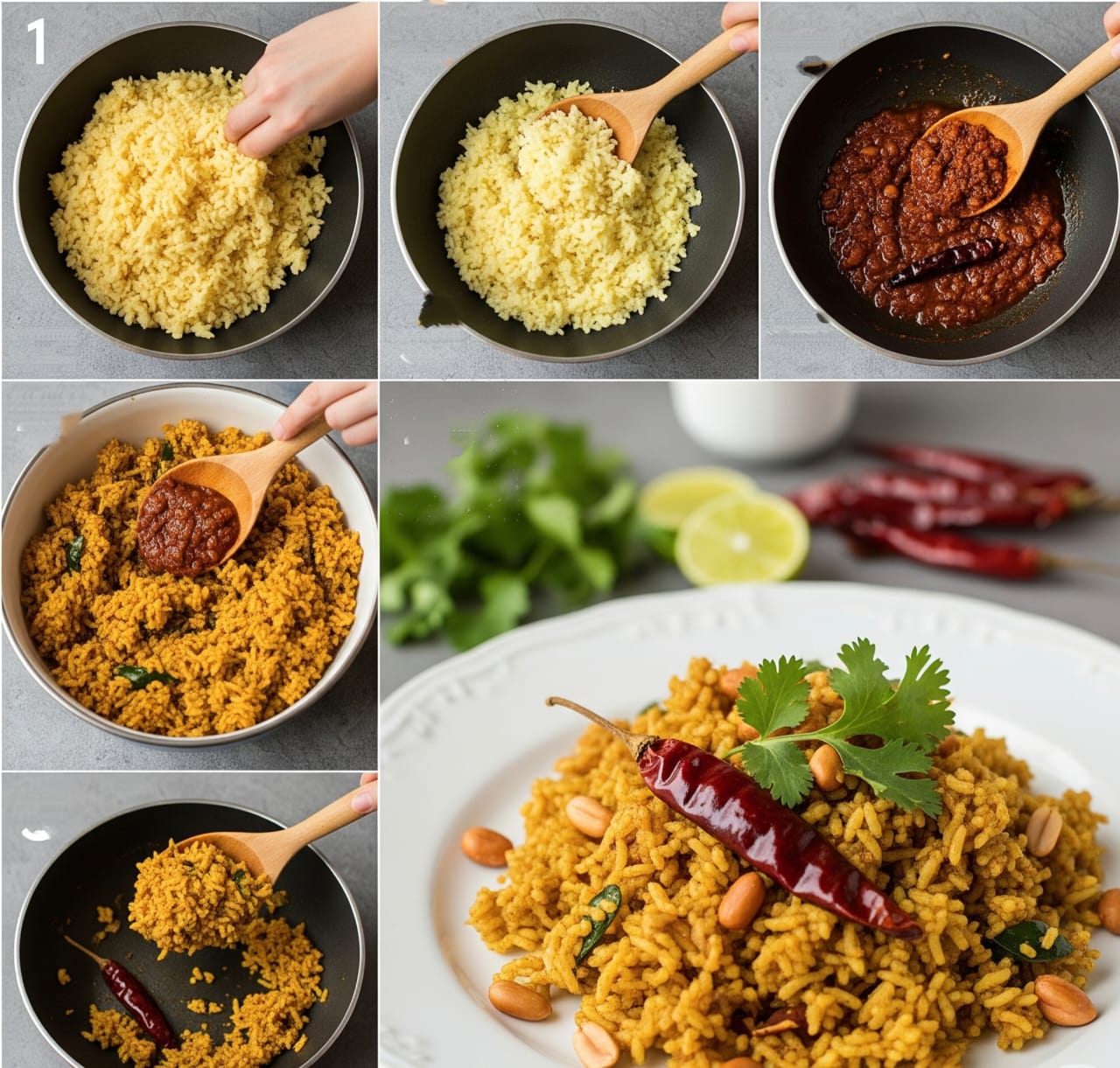
Authentic Chintapandu Pulihora Recipe | Temple-Style Tamarind Rice from Andhra & Telangana
Introduction
Chintapandu Pulihora, popularly known as Tamarind Rice, is one of the most iconic traditional dishes of Andhra Pradesh and Telangana. This tangy, aromatic rice preparation holds a sacred place in South Indian cuisine and is especially famous as temple prasadam. From ancient temples to festive households, Pulihora has been prepared for centuries during auspicious occasions such as Ugadi, Dasara, Sankranti, Varamahalakshmi Vratham, and Navaratri.
What makes authentic Pulihora unique is its perfect balance of sourness from tamarind, subtle sweetness from jaggery, heat from chilies, and nutty flavors from peanuts and lentils. Unlike lemon rice, Pulihora improves in taste as it rests, making it ideal for travel, offerings, and lunchboxes. The recipe shared here follows the traditional temple-style method, focusing on flavor, aroma, and grain separation.
Ingredients
For Cooked Rice
- 1 cup rice (Sona Masuri or aged short-grain rice)
- Water – as needed
- Salt – to taste
- 1 tsp oil
- ½ tsp turmeric powder
For Tamarind Pulusu (Tamarind Paste)
- ½ cup thick tamarind pulp (from lemon-sized tamarind)
- 1–2 tsp jaggery (optional, for balance)
- 3 green chilies, finely chopped
- Salt – to taste
For Tempering
- 2 tbsp oil (sesame oil preferred)
- 1 tsp mustard seeds
- 1 tsp urad dal
- 2–3 tbsp chana dal
- 2 tbsp peanuts
- 2–3 dry red chilies
- A few curry leaves
- A pinch of asafoetida (hing)
- ¼ tsp turmeric powder
- Optional: 1 tsp fennel seeds or sesame seeds
Cooking Time
- Rice Cooking: 15–20 minutes
- Tamarind Paste Preparation: 10 minutes
- Tempering & Mixing: 5–7 minutes
- Total Time: 30–35 minutes
Step-by-Step Instructions
1. Cook and Prepare the Rice
Wash the rice thoroughly and cook it with water, salt, turmeric, and a teaspoon of oil. The rice should be fluffy and well-separated, not mushy. Spread the cooked rice on a wide plate and allow it to cool completely. Gently fluff using a fork to maintain grain separation.
2. Prepare Tamarind Pulusu
Soak tamarind in warm water and extract thick pulp. Transfer it to a pan, add salt, jaggery, and chopped green chilies. Simmer on low flame until the mixture thickens slightly and raw tamarind smell disappears. Switch off and allow it to cool.
3. Make the Tempering
Heat oil in a pan. Add peanuts and fry until golden. Add chana dal and urad dal, sauté until light brown. Add mustard seeds and allow them to splutter. Now add dry red chilies, curry leaves, asafoetida, turmeric, and optional fennel or sesame seeds. Fry until aromatic.
4. Assemble Pulihora
Add prepared tamarind pulusu to the cooled rice and mix gently so that every grain is evenly coated. Add the tempering and mix carefully without breaking the rice.
5. Serve
Pulihora tastes best when rested for at least 30 minutes. Serve at room temperature with papad, pickle, or curd. It is perfect for temple offerings and festive meals.
Tips & Variations
- Use aged rice for best texture and flavor.
- Always cool the rice completely before mixing.
- Sesame oil enhances authentic temple-style aroma.
- Add lemon juice only if extra tanginess is needed.
- You can add roasted cashews for a richer version.
Health Benefits
- Rich in Antioxidants: Tamarind helps reduce inflammation and oxidative stress.
- Aids Digestion: Spices and tamarind stimulate digestive enzymes.
- Cooling Effect: Ideal for summer and festive meals.
- Natural Preservative: Tamarind helps extend shelf life.
- Energy Boosting: Provides quick carbohydrates and healthy fats.
Nutrition (Approx per serving)
- Calories: 260 kcal
- Carbohydrates: 48 g
- Protein: 6 g
- Fat: 7 g
- Fiber: 4 g
Who Should Eat & Who Should Avoid
Recommended for: Vegetarians, travelers, festival fasting days, people needing light yet filling meals.
Avoid or limit if: You have severe acidity, GERD, or tamarind sensitivity. Use mild tamarind and less oil.
Storage Tips
- Stays fresh for 24 hours at room temperature.
- Refrigerate up to 2 days in an airtight container.
- Bring to room temperature before serving.
Frequently Asked Questions
Can I prepare Pulihora in advance?
Yes, Pulihora tastes even better after resting for a few hours.
Is Pulihora vegan?
Yes, it is completely plant-based.
Can I skip jaggery?
Yes, but jaggery balances sourness beautifully.
Conclusion
Authentic Chintapandu Pulihora is more than just a rice dish—it is a celebration of tradition, devotion, and flavor. Whether prepared as temple prasadam or a comforting home meal, this tangy tamarind rice never fails to delight. Try this temple-style Pulihora recipe and experience the true taste of Andhra & Telangana heritage.
సాంప్రదాయ చింతపండు పులిహోర | ఆంధ్ర & తెలంగాణ ఆలయ శైలి తమరింద్ రైస్
పరిచయం
చింతపండు పులిహోర అనేది ఆంధ్రప్రదేశ్ మరియు తెలంగాణ రాష్ట్రాల సంప్రదాయ వంటకాలలో అత్యంత ప్రాచుర్యం పొందిన అన్నం వంటకం. ఇది కేవలం భోజనం మాత్రమే కాదు — ఒక సంస్కృతి, ఒక సంప్రదాయం. శతాబ్దాలుగా ఈ పులిహోరను ఆలయాలలో ప్రసాదంగా సమర్పిస్తూ వస్తున్నారు.
ఉగాది, దసరా, సంక్రాంతి, వరలక్ష్మీ వ్రతం, నవరాత్రులు వంటి పండుగల సమయంలో చింతపండు పులిహోర తప్పనిసరి వంటకంగా ఉంటుంది. పులుపు, కారం, తీపి, కరకరల నువ్వుల-పప్పుల రుచి కలయిక దీనికి ప్రత్యేకత. కాలం గడిచే కొద్దీ రుచి పెరగడం ఈ వంటకానికి ఉన్న ప్రత్యేక గుణం.
ఈ రెసిపీలో మీరు నిజమైన ఆలయ శైలిలో పులిహోర తయారు చేసే విధానాన్ని నేర్చుకుంటారు — అన్నం విడివిడిగా ఉండేలా, చింతపండు రుచి పరిపూర్ణంగా ఉండేలా.
కావలసిన పదార్థాలు
అన్నం కోసం
- బియ్యం – 1 కప్పు (సోనా మసూరి లేదా పాత బియ్యం)
- నీరు – అవసరమైనంత
- ఉప్పు – తగినంత
- నూనె – 1 టీస్పూన్
- పసుపు – ½ టీస్పూన్
చింతపండు పులుసు కోసం
- చింతపండు రసం – ½ కప్పు (నిమ్మకాయ పరిమాణం చింతపండు)
- బెల్లం – 1–2 టీస్పూన్లు (ఐచ్చికం)
- పచ్చిమిర్చి – 3 (సన్నగా తరిగినవి)
- ఉప్పు – తగినంత
తాలింపు కోసం
- నూనె – 2 టేబుల్ స్పూన్లు (నువ్వుల నూనె అయితే ఉత్తమం)
- ఆవాలు – 1 టీస్పూన్
- మినప్పప్పు – 1 టీస్పూన్
- సెనగపప్పు – 2–3 టేబుల్ స్పూన్లు
- పల్లీలు – 2 టేబుల్ స్పూన్లు
- ఎండు మిర్చి – 2–3
- కరివేపాకు – కొద్దిగా
- ఇంగువ – చిటికెడు
- పసుపు – ¼ టీస్పూన్
- (ఐచ్చికం) నువ్వులు లేదా సోంపు – 1 టీస్పూన్
వంట సమయం
- అన్నం ఉడకడం: 15–20 నిమిషాలు
- చింతపండు పులుసు: 10 నిమిషాలు
- తాలింపు & కలపడం: 5–7 నిమిషాలు
- మొత్తం సమయం: 30–35 నిమిషాలు
తయారీ విధానం
1. అన్నం సిద్ధం చేయడం
బియ్యాన్ని శుభ్రంగా కడిగి, నీరు, ఉప్పు, పసుపు, కొద్దిగా నూనె వేసి మెత్తగా కాకుండా విడివిడిగా ఉడికించాలి. ఉడికిన అన్నాన్ని పెద్ద ప్లేటులో చల్లార్చి, ఫోర్క్తో మెల్లగా విడదీయాలి.
2. చింతపండు పులుసు తయారీ
చింతపండును గోరువెచ్చని నీటిలో నానబెట్టి రసం తీసుకోవాలి. పాన్లో ఈ రసాన్ని పోసి, ఉప్పు, బెల్లం, పచ్చిమిర్చి వేసి మెల్లగా మరిగించాలి. పచ్చి వాసన పోయే వరకు ఉడికించి చల్లార్చాలి.
3. తాలింపు చేయడం
పాన్లో నూనె వేడి చేసి పల్లీలు వేసి బంగారు రంగు వచ్చే వరకు వేయించాలి. తరువాత సెనగపప్పు, మినప్పప్పు వేసి వేయించాలి. ఆవాలు చిటపటలాడాక ఎండు మిర్చి, కరివేపాకు, ఇంగువ, పసుపు వేసి కలపాలి.
4. పులిహోర కలపడం
చల్లారిన అన్నంలో చింతపండు పులుసు వేసి మెల్లగా కలపాలి. తరువాత తాలింపు వేసి అన్నం విరగకుండా జాగ్రత్తగా కలపాలి.
5. వడ్డించడం
పులిహోరను కనీసం 30 నిమిషాలు ఉంచితే రుచి బాగా పడుతుంది. పాపడ్లు లేదా ఊరగాయతో వడ్డించండి.
చిట్కాలు & మార్పులు
- కొత్త బియ్యం కాకుండా పాత బియ్యం ఉపయోగించండి.
- అన్నం పూర్తిగా చల్లారిన తరువాతే కలపాలి.
- నువ్వుల నూనె ఆలయ రుచిని ఇస్తుంది.
- చింతపండు ఎక్కువైతే పులుపు అధికమవుతుంది.
ఆరోగ్య ప్రయోజనాలు
- చింతపండు జీర్ణక్రియను మెరుగుపరుస్తుంది.
- వేసవిలో శరీరాన్ని చల్లగా ఉంచుతుంది.
- ప్రకృతిసిద్ధమైన యాంటీఆక్సిడెంట్లు కలిగి ఉంటుంది.
- ఎక్కువసేపు తాజాగా ఉంటుంది.
పోషక విలువలు (ఒక సర్వింగ్కు)
- కేలరీలు: 260 kcal
- కార్బోహైడ్రేట్లు: 48 g
- ప్రోటీన్: 6 g
- కొవ్వు: 7 g
- ఫైబర్: 4 g
ఎవరు తినాలి / ఎవరు నివారించాలి
తినవచ్చు: శాకాహారులు, ప్రయాణ సమయంలో, ఉపవాస పండుగలు.
నివారించాలి: ఎక్కువ ఆమ్లత్వం ఉన్నవారు చింతపండు పరిమాణం తగ్గించాలి.
నిల్వ సూచనలు
- గది ఉష్ణోగ్రతలో 24 గంటలు నిల్వ ఉంటుంది.
- ఫ్రిజ్లో 2 రోజులు నిల్వ చేయవచ్చు.
- వడ్డించే ముందు గది ఉష్ణోగ్రతకు తీసుకురండి.
తరచూ అడిగే ప్రశ్నలు
ముందురోజు తయారు చేయవచ్చా?
అవును, మరింత రుచిగా ఉంటుంది.
ఇది వెగన్ వంటకమా?
అవును, పూర్తిగా వెగన్.
బెల్లం తప్పనిసరా?
కాదు, కానీ రుచిని సమతుల్యం చేస్తుంది.
ముగింపు
సాంప్రదాయ చింతపండు పులిహోర ఒక వంటకం మాత్రమే కాదు — ఇది మన ఆచారాలు, భక్తి, సంప్రదాయానికి ప్రతీక. ఆలయ ప్రసాదంగా అయినా, ఇంటి భోజనంగా అయినా ఈ పులిహోర ప్రత్యేక స్థానాన్ని కలిగి ఉంటుంది. ఈ రెసిపీతో నిజమైన ఆంధ్ర-తెలంగాణ రుచిని ఆస్వాదించండి.
Leave a Comment